



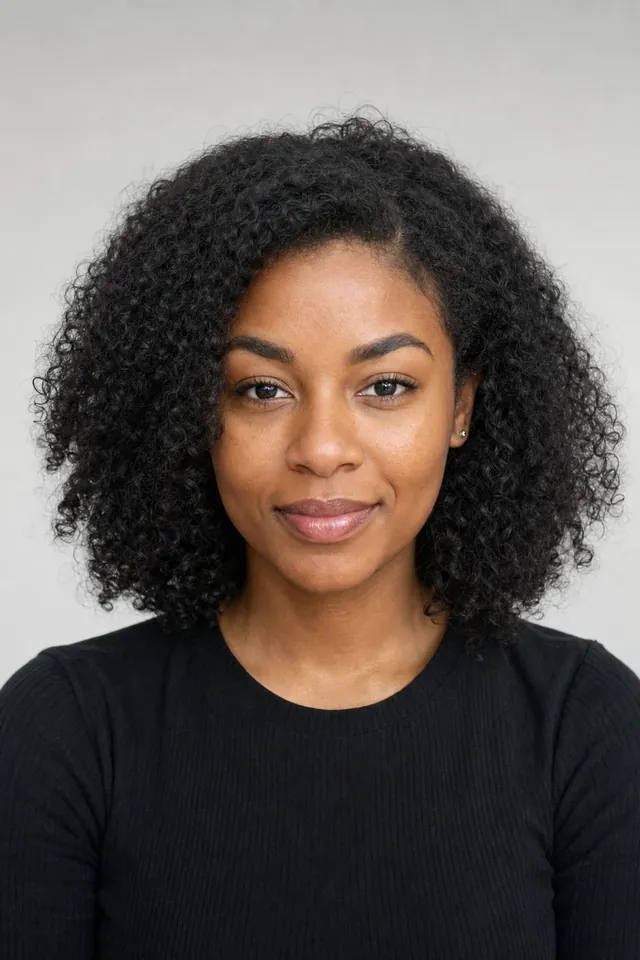
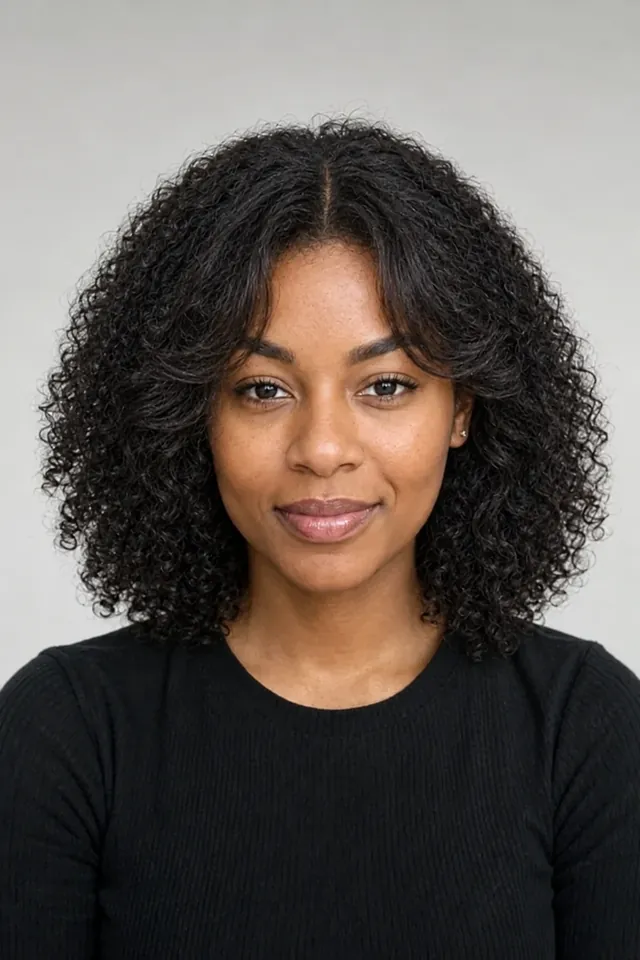
What are curtain bangs?
Curtain bangs are a fringe parted in the middle that sweeps out to both sides of your face, like a pair of curtains drawn open. They're longer and softer than blunt bangs, usually hitting somewhere between the brow and the cheekbone, and they blend into face-framing layers. Because they open in the center, they show more of your forehead and eyes than a full fringe, which is a big part of why they're seen as low-commitment.
Who curtain bangs suit
- Oval faces: almost any length works, so you can go shorter and more dramatic.
- Round faces: keep them longer, ending at or below the cheekbone, so the open center creates a vertical line and the sides angle down instead of adding width.
- Square faces: soft, feathered ends break up a strong jawline and forehead.
- Long or rectangular faces: they visually shorten the face by covering part of the forehead.
- Wavy and curly hair: they work well if they're cut a little longer and dry, so the curl doesn't spring them up too short.
When to think twice
- Strong cowlicks at the hairline can push a center part to one side.
- Very fine, flat hair may need daily blow-drying to keep the sweep.
- If you rarely style your hair, the shape fades within a few weeks without a trim.
What to tell your stylist
Ask for curtain bangs parted in the center, starting longer than you think you want, at about cheekbone length, and blended into face-framing layers. It's easy to take more off at your next visit and impossible to add it back. If your hair is curly, ask for them to be cut dry. Bringing your SnipMirror after image helps your stylist see exactly what you mean.
How to style and maintain curtain bangs
- Blow-dry them with a round brush, rolling each side away from the center part.
- No time? Twist each side back while damp, pin it, and release it once dry.
- Use dry shampoo at the roots. Bangs pick up oil from your forehead fastest.
- Plan a quick bang trim every 4 to 6 weeks. Many salons offer them free or cheap between cuts.